Design Your Sleep Space
Your bedroom environment plays a role in how you sleep. Explore practical ways to optimise comfort, light, and temperature.
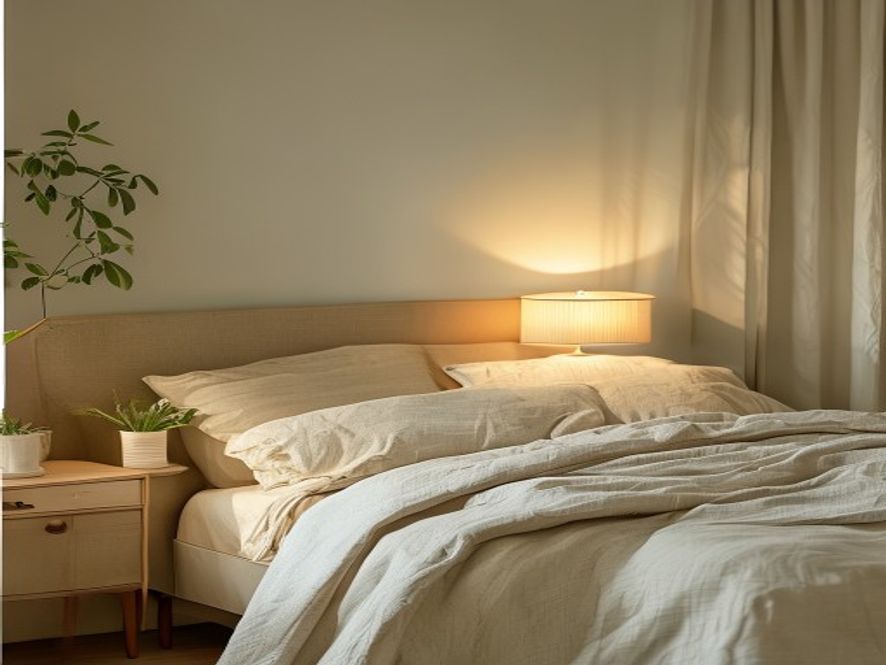
Key Environmental Factors
Temperature
Cool bedrooms (around 16–19°C) are often cited as supportive. Layering blankets lets you adjust as needed.
Lighting
Dim lighting in your evening routine and darkness during sleep are important. Blackout blinds or an eye mask help.
Sound
Minimise sudden noises. Some people find white noise helpful; others prefer quiet. Experiment with what suits you.
Air Quality
Fresh air and moisture control matter. Open a window before sleep, or use a humidifier if the air feels dry.
Comfort
A supportive mattress, comfortable pillows, and quality bedding all contribute to physical ease.
Clutter
A clean, organised space reduces visual stimulation and mental distraction. Simple arrangements feel calming.
Practical Adjustments
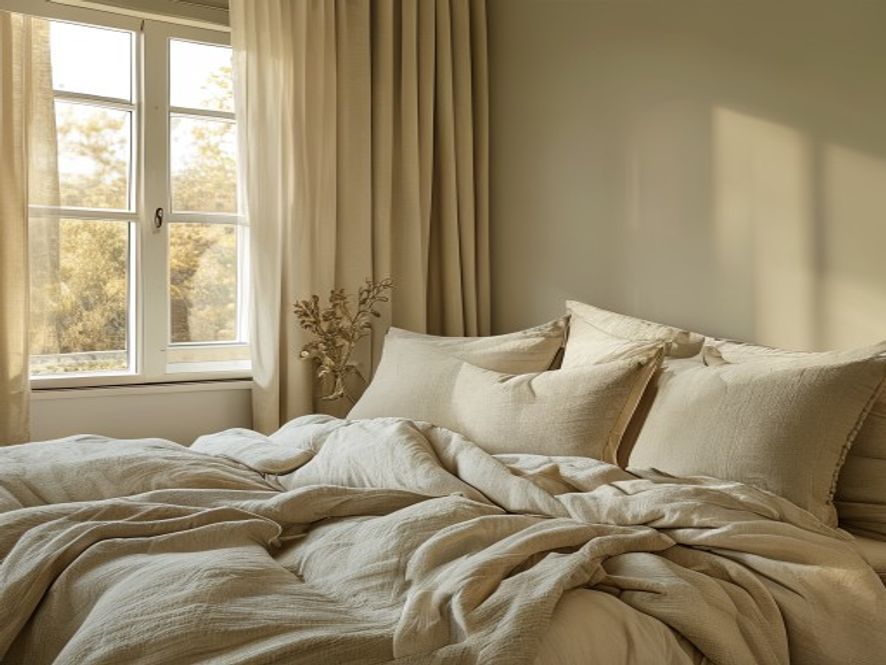
Lighting Adjustments
- Replace bright ceiling lights with dimmer-compatible lamps
- Use warm-toned bulbs (2700K or lower) in evening
- Install blackout curtains or use an eye mask
- Avoid screens 30–60 minutes before sleep
Temperature Control
- Adjust your thermostat gradually in the evening
- Layer blankets so you can regulate easily
- Ensure adequate ventilation
- Consider breathable, natural fabric bedding
Sound Management
- Use earplugs or white noise if external sounds intrude
- Silence notifications on nearby devices
- Choose a quiet location in your home if possible
Quick Environment Checklist
Before Bedtime
- Temperature is comfortable
- Lights are dimmed or off
- Room is tidy and clear
- Curtains or blinds are closed
- Devices are silent or away
Regular Maintenance
- Bedding is clean and comfortable
- Mattress and pillows support your body
- Room is well-ventilated
- Minimal clutter and visual distractions
- Temperature regulation works as intended
Personalise Your Space
Every person's ideal sleep environment is different. Consider your own preferences:
- Temperature sensitivity: Do you tend to run warm or cold?
- Light sensitivity: Do you prefer complete darkness or some ambient light?
- Sound preference: Do you prefer silence, white noise, or soft background sounds?
- Tactile comfort: What textures and materials feel most comforting to you?
- Space size: How much space do you need to feel comfortable?
- Visual aesthetic: What décor or colours help you feel calm?
Design Your Ideal Sleep Environment
Let us work with you to evaluate your current space and suggest personalised improvements.
Schedule a Consultation